
Every year, the off-grid solar sector publishes its numbers, and every year they read a little like a letter from the field. This year’s data, which covers 2025, told a consistent story alongside the year’s biggest financing and policy moves. Demand is strong, money is becoming more selective, and the next chapter will be decided by who gets included.
Here is what we heard.
Demand did not blink
The headline figure is hard to ignore. According to GOGLA’s 2025 Global Off-Grid Solar Market Report, published in June, affiliate companies sold more than 10 million solar kits in 2025. That’s around 10% more than the year before and the strongest year the industry has recorded. East Africa and Nigeria led the growth. GOGLA affiliates now serve nearly 150 million people, and the wider off-grid solar sector improves life for more than 560 million.
The product mix matters as much as the volume. Appliance sales reached 1.83 million units, including fans, pumps and refrigeration. In other words, a household that once bought a light and a phone charger is increasingly buying something that earns money or saves it. That is where energy access starts to become an economic opportunity.
Capital is maturing, and concentrating
The 2025 investment data, also released this year, is more nuanced. Total investment held steady at about $315 million in 2025. However, the number of companies receiving it fell by 41%, from 97 to 57. Nigeria stood out, drawing about $114 million, which GOGLA links to supportive policy, domestic finance and targeted subsidies lining up at the same time.
There are two ways to read this. On the optimistic side, investors now have enough track record to back established operators with real conviction. On the cautious side, the bar for everyone else just went up.
Local banks are walking in
The most encouraging signal may be who showed up. Eighteen investors deployed capital in the sector for the first time in 2025, bringing roughly double the volume of new-investor capital seen in 2024. Among the newcomers are local commercial banks in Nigeria, Tanzania and Madagascar.
When domestic banks decide off-grid solar is bankable, the sector stops depending so heavily on donor and foreign capital. That is what maturity looks like.
Receivables went mainstream
The biggest financing moment of 2026 came in June. African Frontier Capital, d.light’s securitization partner, issued a $50 million green bond listed on the London Stock Exchange’s International Securities Market and backed by customer payments on pay-as-you-go solar systems. It was the first time the sector reached public bond markets through a PAYGO receivables structure. The deal also took d.light’s securitization platform to $1 billion in cumulative purchasing capacity. Similarly, Sun King’s securitization in mid-2025 pointed the same way.
GOGLA’s executive director, Sarah Malm, called these deals proof that the model works. PAYGO receivables are now rated, listed and bought by UK and US institutional investors.
The catch is scale. Securitization carries fixed costs that make it uneconomical for smaller firms, which echoes the concentration story in the investment data.
The gap to watch: Locally owned businesses
The same data carried a warning. No locally owned company received start-up or scale-up financing in 2025, and total locally owned investment fell to $9.9 million, down from $84.6 million in 2023. GOGLA calls this near-disappearance one of the most significant findings of the year. After all, these are often the distributors closest to the customer, yet they are the least visible to funders.
As a result, GOGLA’s message to investors, development finance institutions, philanthropies and governments has shifted. The question is no longer how much capital the sector attracts. Instead, it is how that capital is structured and who it reaches.
Researchers raised a related concern in a May 2026 Nature Sustainability perspective. As commercial funding reshapes who benefits from PAYGO solar, they argue, the sector must prioritize equity so the poorest households are not left behind.
Mission 300 moved from announcement to delivery
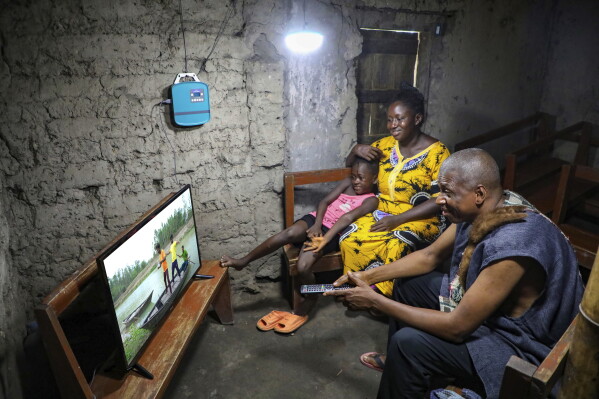
Mission 300, the World Bank and African Development Bank drive to connect 300 million Africans to electricity by 2030, shifted firmly into implementation this year. By July, the program had connected 50 million people, a sixth of the way to its target, and six more countries signed national energy compacts at the Africa Energy Forum.
The compacts are where off-grid solar’s future gets decided. GOGLA reviewed the 30 compacts finalized by January 2026 and found that off-grid solar’s role varies widely. Some compacts put decentralized energy at the center. Others prioritize grid and mini-grid expansion and give standalone solar a limited, transitional role. Across all 30, off-grid solar and distributed renewables could connect more than 127 million people, backed by over $39 billion in targeted investment.
That potential is significant. In fact, GOGLA’s executive director, Sarah Malm, estimates that off-grid solar and distributed renewables alone could reach around half of Mission 300’s target, particularly in rural areas where grid extension is slow or costly. The lesson of the year, then, is that being included in the plan matters as much as being in the market.
What it means for the people building the off-grid solar sector
Growth is no longer the open question. Rather, the open question is whether the infrastructure around the sector can keep up. That means financing that reaches smaller distributors, systems that track customers, repayments and assets reliably, and data that lets a young business show it is bankable.
At Upya, this is the part of the story we watch most closely. Distributors rarely struggle for demand. What they struggle with is proving, in a form a lender trusts, that their portfolio performs. That’s why better data is one of the most practical ways to widen the funnel.
Looking ahead to Kigali
The sector gathers in Kigali from October 27 to 29 for the Global Off-Grid Solar Forum and Expo, where the next Off-Grid Solar Market Trends Report is due to launch. We will be reading it with one question in mind: are the next generation of distributors, especially local ones, being brought along?
If the answer is yes, 2026 will be remembered as the year the sector grew up. If not, it will be remembered as the year the money got narrower. For now, the data suggests it could still go either way.
Will you be in Kigali?
Will you be in Kigali?
Rose, our Head of PAYGO Solar Home Systems, will be at the Expo from October 27 to 29. Bring your portfolio headaches, and she’ll bring practical ideas and good energy. Book a time with Rose to grab a quiet spot to chat, or just say hi if you see her around!