
What Is Process Automation?
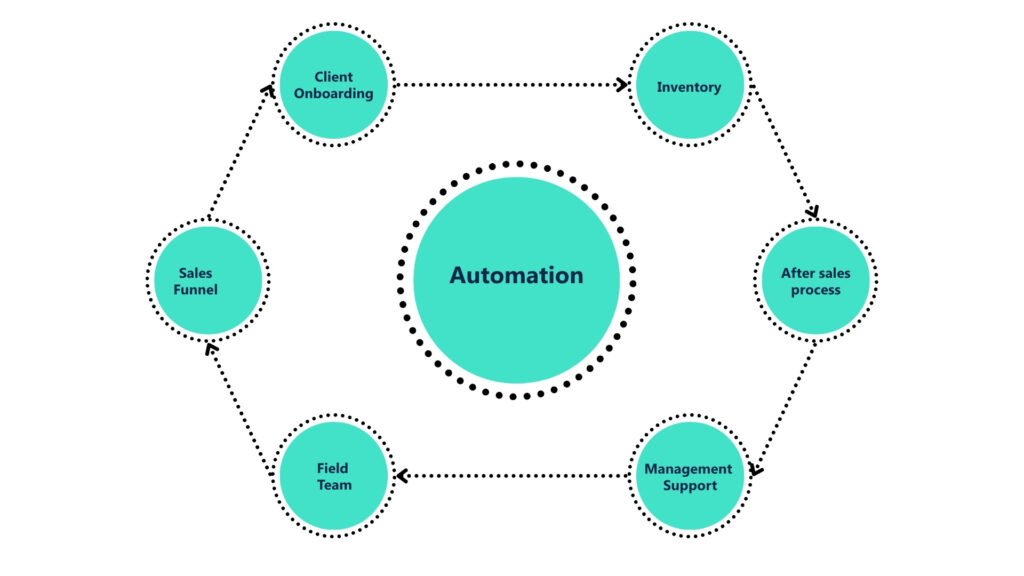
When we talk about automation, we’re specifically referring to process automation. Let’s break this down:
- A process is a series of actions you take to achieve a result
- Automation is the use of technology and devices that can operate without human control
In the context of CRM software, process automation allows specific actions performed by teams or individuals to be automatically connected and triggered based on certain events. It’s about making your operations smarter
Why Automate? The Key Benefits
Organizations that embrace automation typically see improvements across five critical areas:.
Eliminate time lags and human error
You no longer rely on people to manually perform tasks and communicate them across the organization. Information flows automatically where it needs to go.
Enhanced accuracy and consistency
Automations are set up once and executed the same way every time
Built-In tracking for management
It becomes much easier to track who’s doing what at any point, enabling more effective team management and clearer accountability.
Improved customer experience
Faster response times and consistent service delivery lead to higher customer satisfaction.
Increased operational efficiencies
Your team focuses on high-value work instead of repetitive manual tasks.
Real-World Automation Examples
Example 1: Managing Late Payments
This scenario affects virtually every distributor as portfolios mature and some customers default on their contracts.
The Scenario: You’re distributing solar home systems or PAYGO smartphones, and a client’s product is locked after he/she has missed payments for more than 15 days.
The Automated Workflow:
- Day 15: A flag is automatically applied to the contract
- Trigger: This flag creates a ticket for customer support to reach out and complete a questionnaire
- Conditional actions based on response:
- Can’t pay anymore, task automatically sent to field agent to repossess the unit
- Can pay in cash task automatically sent to field agent to collect payment
Wants to restructure payments, approval request automatically sent to customer support manager
Example 2: Internet Installation Workflow
For service providers handling daily installations, automation streamlines the entire process:
- Customer pays subscription, and installation job automatically assigned to technician
- Technician receives job details on mobile app (location, client info, equipment needed)
- Technician completes installation, records details in mobile app (checklist, photos, customer signature)
- System automatically updates client contract and inventory based on equipment used
Lumos Case Study
How to Move from Manual to Automated Processes
The journey to automation follows a structured approach:
Step 1: Document your current processes
Start by mapping out exactly how things work today:
- Stock movement: How does inventory flow from warehouse to regional managers to agents?
- Client complaints: What steps happen from the initial call to resolution?
Sit down with your team and ask: How are things done now? Is this efficient? What should change?
Step 2: Collaborate with your technology partner
Once you’ve documented your ideal process, work with your CRM provider. This collaboration often reveals opportunities to:
- Combine 2-3 manual steps into one automated action
- Leverage features you didn’t know existed
- Further optimize your workflow
Step 3: Implementation and training
Your CRM provider implements the automation, demonstrates how it works, makes final adjustments, and trains your team. Then you’re ready to go live.
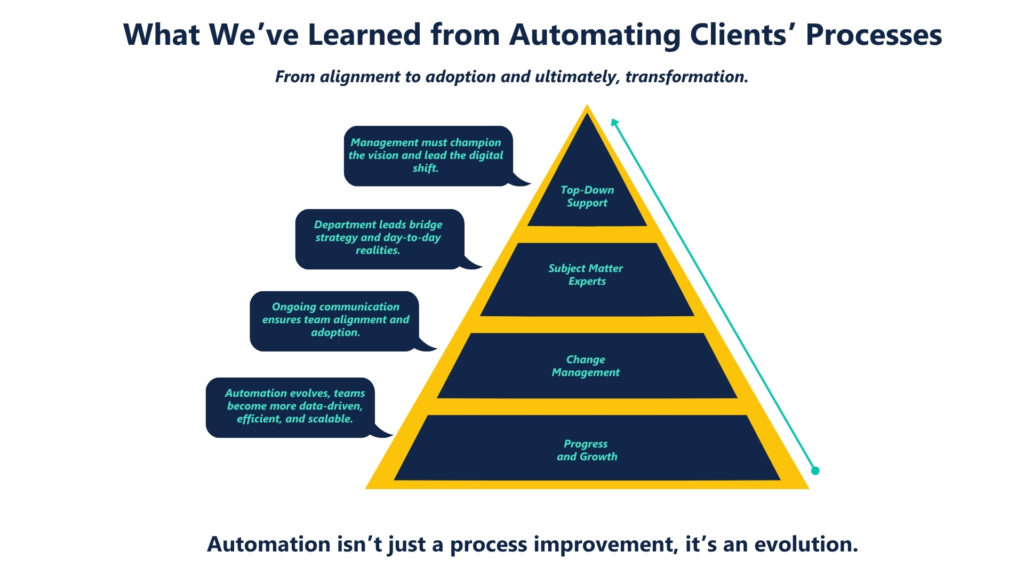
Having worked with numerous clients on automation projects, we’ve identified critical success factors:
Top-Down approach
Management must have a clear vision and commitment. The entire leadership team needs to be aligned and actively championing the change.
Involve Subject Matter Experts (SMEs)
Department heads and subject matter experts must be part of the process. They understand how things actually work and how they could work better. Their buy-in is essential for organization-wide adoption.
Prioritize change management
Management needs to communicate the need for change and its benefits throughout the organization. This reduces resistance, a natural human response to change.
Communication must:
- Reach every aspect of the business impacted by automation
- Be ongoing, not a one-time announcement
- Be reiterated as the new process is being adopted
Why Automation Matters in the Off-Grid Industry
The off-grid distribution sector has evolved dramatically over the past decade:
Increasing Complexity
Distributors have matured from selling single products to offering diverse product lines and comprehensive after-sales services. This growth brings more complex internal processes.
Expanding Teams
Organizations now have larger teams with specific mandates and responsibilities, creating an increasing need for seamless internal communication.
The Efficiency Imperative
As the industry grows, margins shrink. Companies must cut costs by increasing efficiencies and automation is one of the most powerful tools available.
The result? Without automation, you’re left with lengthy, inefficient processes and teams that are difficult to manage effectively.
Ready to Get Started?
We see automation as a differentiating factor in emerging businesses. If you’d like to discuss how process automation can transform your operations, we’d love to hear from you.
For more insights and case studies on automation in the off-grid sector, visit Upya.io.